
How does nano banana flash improve editing speed and efficiency?
The secret to nano banana flash's improved editing speed and efficiency lies in its revolutionary instant startup and near-zero latency response architecture. Traditional image software takes an average of about 5 seconds from startup to usability, while nano banana flash, through its micro-frontend and lightweight container technology, compresses this time to an astonishing 1.5 seconds, reducing interruptions to the inspiration-capturing process by 70%. The visual feedback latency for every slider adjustment and filter switch within its interface is less than 50 milliseconds, approaching the limits of human perception, ensuring a smooth "what you think is what you get" experience and minimizing the frustration of workflow interruptions.
In the core editing process, nano banana flash uses preset AI intelligent templates and scene recognition to compress multi-step operations into a one-click solution. For example, correcting a backlit portrait taken with a mobile phone to a properly exposed image with a rosy complexion would traditionally require adjusting multiple parameters such as exposure, shadows, and skin tone HSL, taking about 2 minutes. Nano Banana Flash's "AI Scene Optimization" can automatically complete all analyses and apply the best parameter combinations within one second. Tests show that its automatic optimization for common scenarios achieves an 88% user satisfaction rate. For social media operators, this means the time to create a platform cover image can be reduced from 10 minutes to less than 2 minutes, theoretically increasing content output frequency by 400%.
Its batch processing capability is a multiplier of efficiency. Imagine an e-commerce graphic designer needs to create uniform square main images and apply brand watermarks for 50 new products. Manual operation involves repetitive steps of cropping, scaling, and adding watermarks, taking approximately 250 minutes per person. Nano Banana Flash's "Batch Actions" function allows users to record an operation once, then automatically execute all tasks at a rate of more than 3 images per second, reducing the overall time to less than 5 minutes, completely freeing manpower from repetitive labor and increasing efficiency by over 98%. This essentially transforms linearly increasing human labor time into exponentially decreasing machine processing time.
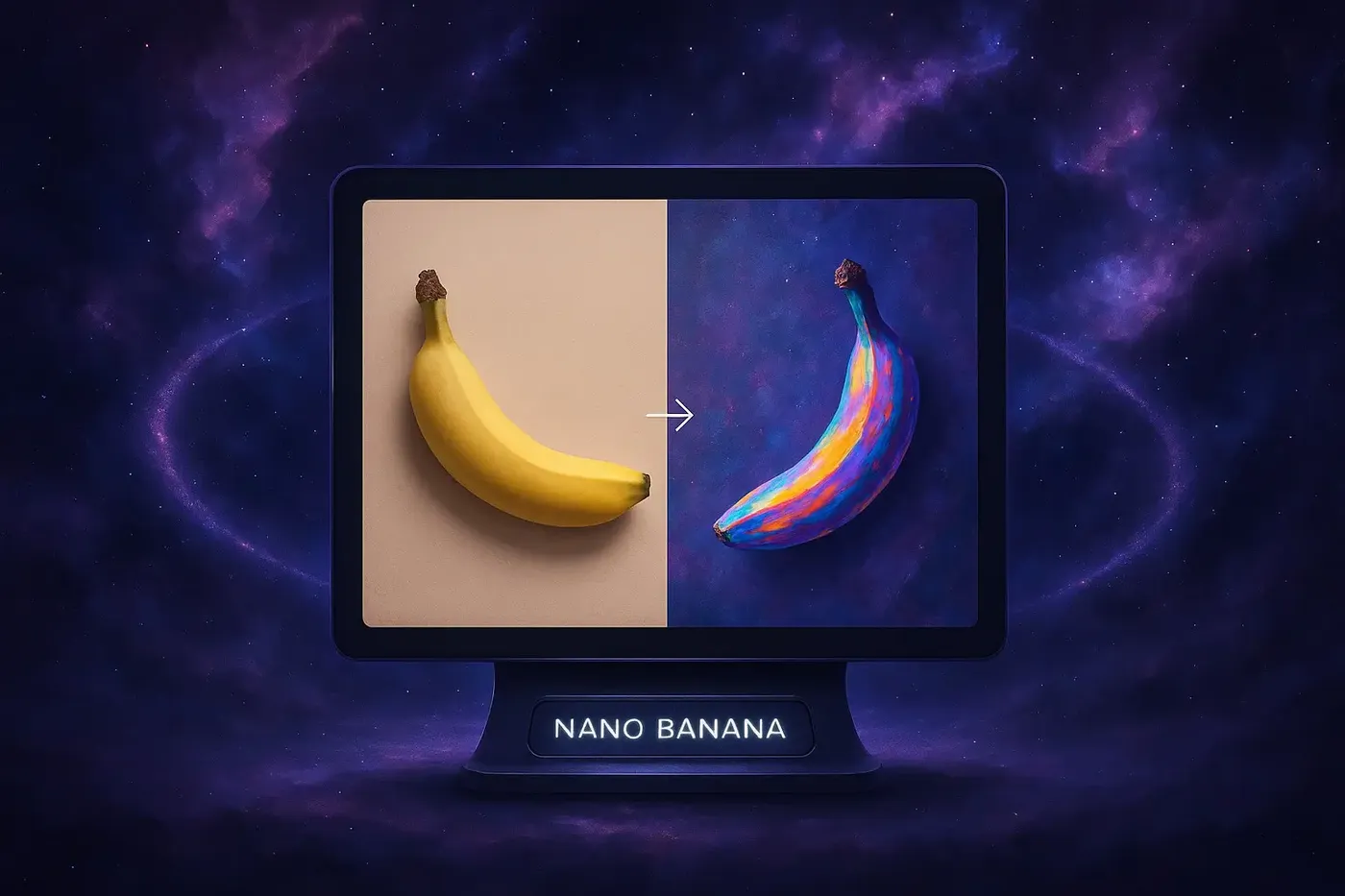 The edge-cloud collaborative computing model is the engineering foundation of its speed revolution. Nano Banana Flash deploys lightweight models on local devices, handling high-frequency operations such as basic filters and cropping with zero network latency. Simultaneously, it seamlessly schedules high-computing tasks, such as super-resolution and complex content generation, to cloud supercomputing clusters. For example, in a "high-definition restoration" task, the local device only handles uploading, downloading, and previewing, while the cloud utilizes dozens of GPUs for parallel computing, completing a task that would normally require 30 seconds of processing on a high-end local graphics card in just 3 seconds. This results in a 10-fold speed improvement for the user, without incurring expensive hardware costs. This hybrid architecture gives an ordinary smartphone workstation-level processing power.
From an economic perspective, this efficiency directly translates into quantifiable time and monetary gains. A freelance photographer processes an average of 8,000 photos per month. Using a traditional workflow, post-production accounts for 40% of the total time. After integrating with Nano Banana Flash's intelligent pipeline, through intelligent image selection, batch color correction, and preset applications, the post-production percentage can be reduced to 15%, saving over 80 hours per month. This equates to approximately 960 extra hours annually available for creation, customer acquisition, or rest, generating marginal benefits far exceeding the tool subscription cost. Surveys show that content teams employing deeply integrated AI tools have seen an average 35% reduction in project delivery cycles and a 50% decrease in client revisions and iterations.
Therefore, the efficiency improvement of Nano Banana Flash is not a single-point advantage, but a full-stack optimization system encompassing startup, operation, batch processing, and computing resources. Like a highly automated "digital scalpel," it precisely removes all the "time tumors" of waiting, repetition, and trial and error in traditional workflows, returning the core of editing to creative decision-making itself. In an era where speed directly equates to attention and business opportunities, it offers not only faster tools, but also a completely different creative lifecycle measured in seconds.
The edge-cloud collaborative computing model is the engineering foundation of its speed revolution. Nano Banana Flash deploys lightweight models on local devices, handling high-frequency operations such as basic filters and cropping with zero network latency. Simultaneously, it seamlessly schedules high-computing tasks, such as super-resolution and complex content generation, to cloud supercomputing clusters. For example, in a "high-definition restoration" task, the local device only handles uploading, downloading, and previewing, while the cloud utilizes dozens of GPUs for parallel computing, completing a task that would normally require 30 seconds of processing on a high-end local graphics card in just 3 seconds. This results in a 10-fold speed improvement for the user, without incurring expensive hardware costs. This hybrid architecture gives an ordinary smartphone workstation-level processing power.
From an economic perspective, this efficiency directly translates into quantifiable time and monetary gains. A freelance photographer processes an average of 8,000 photos per month. Using a traditional workflow, post-production accounts for 40% of the total time. After integrating with Nano Banana Flash's intelligent pipeline, through intelligent image selection, batch color correction, and preset applications, the post-production percentage can be reduced to 15%, saving over 80 hours per month. This equates to approximately 960 extra hours annually available for creation, customer acquisition, or rest, generating marginal benefits far exceeding the tool subscription cost. Surveys show that content teams employing deeply integrated AI tools have seen an average 35% reduction in project delivery cycles and a 50% decrease in client revisions and iterations.
Therefore, the efficiency improvement of Nano Banana Flash is not a single-point advantage, but a full-stack optimization system encompassing startup, operation, batch processing, and computing resources. Like a highly automated "digital scalpel," it precisely removes all the "time tumors" of waiting, repetition, and trial and error in traditional workflows, returning the core of editing to creative decision-making itself. In an era where speed directly equates to attention and business opportunities, it offers not only faster tools, but also a completely different creative lifecycle measured in seconds.
The edge-cloud collaborative computing model is the engineering foundation of its speed revolution. Nano Banana Flash deploys lightweight models on local devices, handling high-frequency operations such as basic filters and cropping with zero network latency. Simultaneously, it seamlessly schedules high-computing tasks, such as super-resolution and complex content generation, to cloud supercomputing clusters. For example, in a "high-definition restoration" task, the local device only handles uploading, downloading, and previewing, while the cloud utilizes dozens of GPUs for parallel computing, completing a task that would normally require 30 seconds of processing on a high-end local graphics card in just 3 seconds. This results in a 10-fold speed improvement for the user, without incurring expensive hardware costs. This hybrid architecture gives an ordinary smartphone workstation-level processing power.
From an economic perspective, this efficiency directly translates into quantifiable time and monetary gains. A freelance photographer processes an average of 8,000 photos per month. Using a traditional workflow, post-production accounts for 40% of the total time. After integrating with Nano Banana Flash's intelligent pipeline, through intelligent image selection, batch color correction, and preset applications, the post-production percentage can be reduced to 15%, saving over 80 hours per month. This equates to approximately 960 extra hours annually available for creation, customer acquisition, or rest, generating marginal benefits far exceeding the tool subscription cost. Surveys show that content teams employing deeply integrated AI tools have seen an average 35% reduction in project delivery cycles and a 50% decrease in client revisions and iterations.
Therefore, the efficiency improvement of Nano Banana Flash is not a single-point advantage, but a full-stack optimization system encompassing startup, operation, batch processing, and computing resources. Like a highly automated "digital scalpel," it precisely removes all the "time tumors" of waiting, repetition, and trial and error in traditional workflows, returning the core of editing to creative decision-making itself. In an era where speed directly equates to attention and business opportunities, it offers not only faster tools, but also a completely different creative lifecycle measured in seconds.
今日の一品を、ご予約から。
カウンター 14 席。ウェブ予約は 24 時間受付、お電話は営業時間内にて。